Ordering research peptides online begins with a clear material specification, not a checkout button. A laboratory needs to know which chemical form it is buying, what documentation will accompany the shipment and whether the material fits the planned experiment. A familiar product name or an attractive price cannot answer all three questions.
This guide provides a practical purchasing workflow for research teams exploring the Peptides Lab Sciences catalogue. It explains how to prepare an enquiry, compare quotations and check a delivery without making assumptions about a supplier’s testing, qualifications or shipping capabilities. It covers laboratory procurement and does not provide clinical or administration advice.
Define the research requirement before choosing a listing
Start by writing down the purpose of the material in your experiment. Is it a reference for analytical work, an input to a cell-based assay or a compound being compared with a control? Each purpose can require different evidence. A material suitable for exploratory work may need further characterisation before it is used in a quantitative study.
Record the required identity, sequence where relevant, terminal modifications and specified chemical form. Include any counterion or formulation requirement that affects your method. A short catalogue name may omit details that matter to reproducibility, so ask for clarification when the listing does not fully describe your intended material.
Keep a distinction between the amount of material in a container and a measured peptide content result. Also distinguish a purity specification from a batch-specific measured value. If your experiment depends on a particular acceptance criterion, put that criterion into the enquiry rather than assuming that a general marketing statement covers it.
Request these documents before ordering research peptides online
| Document or confirmation | What to check | Why it matters |
|---|---|---|
| Material specification | Identity, form, quantity and agreed acceptance criteria | Connects the order to the experimental requirement |
| Lot-specific certificate of analysis | Batch identifier, measured results, method references and dates | Shows what was reported for the relevant lot |
| Supporting analytical data | Chromatogram, mass result or other evidence appropriate to the claim | Allows a more meaningful review than a percentage alone |
| Handling and storage information | Instructions applicable to the supplied form | Helps the laboratory plan receipt and storage |
| Safety information where applicable | Relevant hazards, precautions and supplier documentation | Supports the laboratory’s own risk assessment |
| Commercial quotation | Pack size, currency, applicable charges, delivery estimate and terms | Defines the actual purchasing commitment |
These are questions to ask, not a statement that every catalogue item already includes every document. If a supplier cannot provide a requested result, decide whether independent testing or a different specification is needed. An unanswered question should remain visible in the purchasing record.
Check that a COA belongs to the offered lot
A report for a previous batch can demonstrate the format of a supplier’s documentation. It does not establish the properties of the lot you will receive. Ask whether the offered lot has been assigned, whether its COA is available and whether the same identifier will appear on the supplied container.
Check who performed the analysis and what information the report contains. Do not assume that the words “tested” or “third party” establish the complete scope of a laboratory’s work. If the testing organisation or method matters to your acceptance criteria, request enough information to assess it.
Compare quotations on the same basis
Two quotations can appear comparable while describing different materials. One might quote gross material mass while another defines peptide content. Pack sizes, chemical forms, documentation and delivery conditions can also differ. Compare those fields before reducing the decision to cost per milligram.
Create a short comparison sheet with one row per quotation and a consistent set of columns. Mark unavailable information as “not supplied” rather than entering a favourable assumption. For a repeat study, continuity of batch documentation and ability to trace future lots can be as relevant as the initial price.
Hypothetical purchasing example: a research team receives two offers for a nominal 5 mg peptide pack. Offer A includes a lot-specific chromatogram and identity result but does not define the quantity basis. Offer B defines the quantity basis but provides only a general purity specification. Neither is fully comparable yet. The next step is to clarify the missing fields, not declare a winner based on price.
This scenario is illustrative and does not describe offers from Peptides Lab Sciences. It shows why a disciplined enquiry can prevent misunderstandings before an order is placed.
Ask precise questions about catalogue products
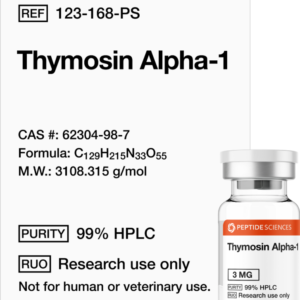
When reviewing a listing such as Thymosin Alpha-1, confirm the offered variant and quantity rather than relying only on the image. Images can illustrate a pack format, while selectable options or an updated specification define the order.
For the Tesamorelin 5 mg listing, a useful enquiry would ask how the stated quantity is defined, what lot-specific analytical evidence is available and what information accompanies delivery. The product name alone does not establish suitability for your particular assay.
Our guide to peptide purity testing and COAs explains why HPLC area purity, molecular identity and net peptide content are different measurements. Use that distinction when writing acceptance criteria and reviewing a supplier’s response.
Confirm delivery arrangements without assuming guarantees
Before paying, check the destination the supplier can serve, the quoted dispatch estimate and any conditions relevant to the supplied material. An estimated delivery date is different from a guaranteed date. If your experiment has a fixed start, allow time for receipt checks and resolution of documentation issues.
Ask about packaging and transport conditions where they matter to the material specification. A temperature-sensitive requirement should be agreed explicitly. Do not infer a validated cold chain from a photograph of insulated packaging, and do not infer room-temperature stability from the absence of a shipping warning.
Review the supplier’s current terms for damaged packages, incorrect items and discrepancies in documentation. Keep the quotation and written confirmations with the order. If a point is essential to acceptance, resolve it before purchase rather than relying on an informal expectation.
Use a simple receiving checklist
- Record the delivery date and order reference.
- Compare the delivered product and pack size with the agreed specification.
- Check the lot identifier against the accompanying report.
- Inspect the packaging and document any visible damage.
- Follow the applicable storage information and record any known transport concern.
- Keep unresolved discrepancies separate from accepted inventory in accordance with your laboratory procedures.
- Approve the material for the intended work only after the required review is complete.
A receiving check is useful even for a familiar supplier. The purpose is to preserve traceability and catch mismatches early. Keep observations factual: record what was delivered and which documents were reviewed, rather than writing unsupported claims about stability or quality.
Further resources for analytical review
Agilent’s peptide standards resource provides context for peptide analysis and reference materials. The EMA’s ICH Q2(R2) resource and FDA’s analytical validation guidance help explain the importance of methods being suitable for their intended purpose. These references do not confer approval or certification on a catalogue supplier.
Frequently asked questions
1. What should I ask before ordering a research peptide?
Ask for the exact material specification, quantity basis, available lot-specific analytical evidence and applicable handling information. Confirm commercial terms and delivery arrangements separately.
2. Is a product photograph enough to confirm the pack size?
No. Treat it as an illustration and confirm the variant and pack size in the listing or written quotation. Check the actual delivered label against the order.
3. Should I choose the cheapest quotation?
Compare equivalent specifications and documentation first. Missing information can prevent a meaningful price comparison or require further testing.
4. What if the COA and container show different lot numbers?
Record the mismatch and request clarification. Do not assume that a report for another lot applies to the delivered material.
5. Does research-use labelling establish suitability for human use?
No. A research catalogue listing and analytical report do not establish clinical approval, safety or effectiveness. This purchasing workflow is for laboratory research materials.