Topical Research Peptides
Showing 1–12 of 19 results
-
-
-
-
-
-
 Research Peptides
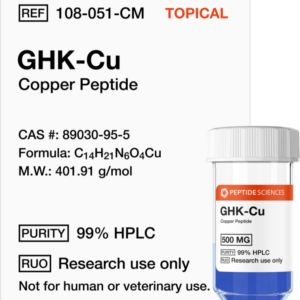
GHK-CU (COPPER PEPTIDE) (TOPICAL)
Price range: £200.00 through £330.00 Select options This product has multiple variants. The options may be chosen on the product page -
-
-
-
-
-
Topical Research Peptides for UK Laboratories
Explore topical research peptides and specialist peptide materials supplied for lawful cosmetic-chemistry, formulation, dermal-model and extracellular-matrix research in the United Kingdom.
Peptide Lab Sciences brings topical peptide materials together in a dedicated catalogue that makes it easier to compare compound names, stated quantities, research contexts and available formats.
Products listed here are laboratory research materials unless an individual product page expressly identifies a separately regulated finished cosmetic product. They are not medicines, consumer skincare products or personal-use treatments.
What Are Topical Research Peptides?
Topical research peptides are peptide compounds studied within controlled laboratory models associated with formulation science, material interactions, peptide stability, molecular signalling and extracellular-matrix research.
The word “topical” in a research-product title describes its catalogue positioning or intended experimental context. It does not automatically mean the product is a finished cosmetic, approved skincare treatment or safe for direct application to human skin.
Researchers must independently establish appropriate handling procedures, experimental concentrations, formulation compatibility and suitability for their chosen laboratory model.
Browse Cosmetic and Formulation Research Peptides
The Peptide Lab Sciences catalogue may include materials such as:
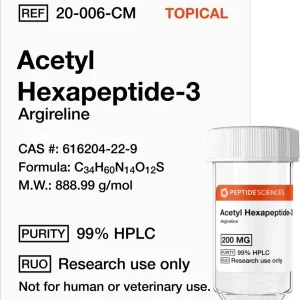
- Acetyl Hexapeptide-3, also known as Argireline
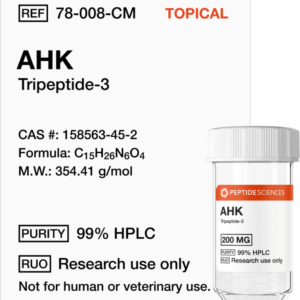
- AHK or Tripeptide-3
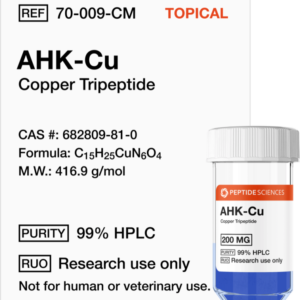
- AHK-Cu
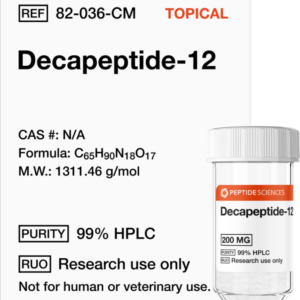
- Decapeptide-12
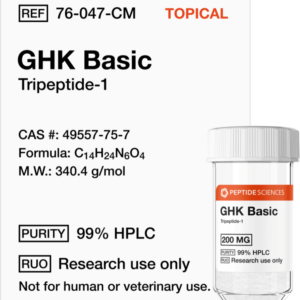
- GHK Basic or Tripeptide-1
- GHK-Cu or copper peptide
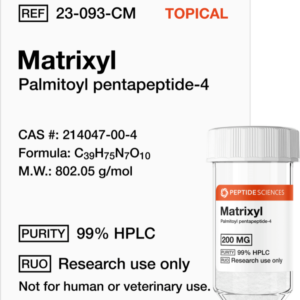
- Matrixyl research materials
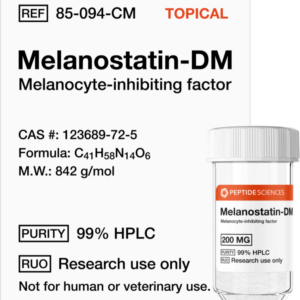
- Melanostatin DM
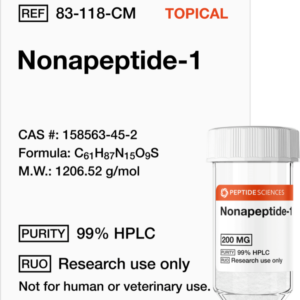
- Nonapeptide-1
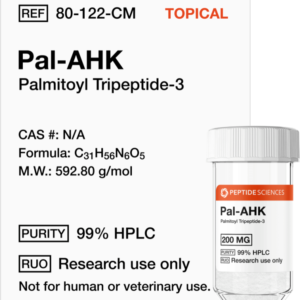
- Pal-AHK
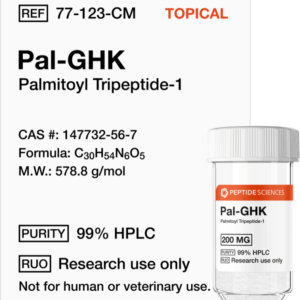
- Pal-GHK or Palmitoyl Tripeptide-1
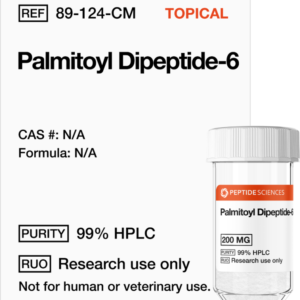
- Palmitoyl Dipeptide-6
- Pentapeptide-18 or Leuphasyl
- Rigin or Palmitoyl Tetrapeptide-7
- SNAP-8
- SYN-AKE
- SYN-COLL or Palmitoyl Tripeptide-5
- Tripeptide-29
- Vialox or Pentapeptide-3V
Availability, quantities and formats may change. Open the individual product page to confirm the current specification and applicable research limitations.
Compare Topical Peptide Materials
Researchers should evaluate more than the commercial or alternative name of a topical peptide. Several compounds may have similar catalogue names while differing in sequence, modification, carrier association, physical format or stated quantity.
Before selecting a product, examine:
- Complete peptide or compound name
- Alternative scientific or catalogue name
- Stated quantity
- Physical format
- Available variations
- Peptide modification where identified
- General formulation-research context
- Available analytical documentation
- Laboratory storage information
- Handling limitations
- Batch information
- Research-use disclaimer
The inclusion of a compound within this category does not establish compatibility with a particular formulation, concentration, carrier material or experimental system.
Copper Peptides and Related Materials
This category includes copper-associated peptides and non-copper peptide materials. Researchers should distinguish clearly between GHK, GHK-Cu, AHK and AHK-Cu.
The addition of “Cu” identifies a copper-associated form and should not be treated as interchangeable with the corresponding non-copper peptide. Product specifications and available documentation should be checked before experimental use.
Colour, texture or physical appearance alone cannot confirm compound identity, purity or concentration. Researchers should rely on applicable specifications and genuine analytical information.
Palmitoylated Research Peptides
Some topical research materials are palmitoylated peptides. Palmitoylation associates a lipid-derived group with a peptide structure and may influence how the compound behaves within experimental formulation systems.
Products such as Pal-GHK, Pal-AHK, Palmitoyl Tripeptide-5, Palmitoyl Tetrapeptide-7 and Palmitoyl Dipeptide-6 should be identified by their complete stated names.
Researchers should not assume that two palmitoylated peptides have equivalent sequences, biochemical properties or formulation requirements.
Laboratory Formulation Research
Topical peptide research may involve controlled investigation of:
- Peptide stability within experimental formulations
- Interactions between peptides and carrier materials
- Solubility and dispersion behaviour
- Material compatibility
- Molecular signalling in laboratory models
- Extracellular-matrix pathways
- Cosmetic-chemistry formulation systems
- Analytical identification and stability assessment
Descriptions of research interest provide scientific context only. They do not demonstrate safety, effectiveness or suitability for cosmetic or therapeutic use in humans.
Peptide Lab Sciences does not provide instructions for personal skincare preparation, direct application, self-experimentation or unregulated cosmetic manufacturing.
Product Documentation and Traceability
Identity, purity, consistency and traceability can materially affect experimental results. Analytical and manufacturing claims must therefore be supported by genuine evidence.
Where batch-specific documentation is available, researchers should confirm that the report corresponds with the product and batch being considered.
Peptide Lab Sciences will not describe a product as independently tested, HPLC verified, mass-spectrometry confirmed, GMP manufactured, ISO certified or above a stated purity level unless appropriate supporting documentation is available.
Scientific references may be provided to explain the biochemical or formulation background of a compound. A reference does not establish approval or suitability for direct human application.
Ordering Topical Research Peptides in the UK
Customers can browse available products, compare specifications and review delivery options during checkout.
Before placing an order, customers should confirm:
- The correct peptide has been selected
- The complete compound name has been reviewed
- The stated quantity is correct
- The selected variation is appropriate
- The intended research application is lawful
- Suitable laboratory facilities are available
- Storage and handling requirements can be met
- Applicable institutional requirements have been satisfied
Delivery estimates can vary according to stock status, payment confirmation, destination, weekends, public holidays and carrier conditions.
Responsible Research Use
Unless expressly stated otherwise for a separately regulated finished product, materials in this category are:
- For laboratory research only
- Not finished consumer cosmetics
- Not intended for direct personal application
- Not for human consumption
- Not for veterinary use
- Not medicines
- Not dietary supplements
- Not intended for injection
- Not intended to diagnose, treat, cure or prevent disease
- Not supplied with personal-use formulation instructions
Customers are responsible for ensuring that purchase, possession, handling, storage and intended use comply with applicable laws and institutional policies.
Frequently Asked Questions
What are topical research peptides?
They are peptide materials investigated in controlled cosmetic-chemistry, formulation, dermal-model, material-interaction and related laboratory studies.
Are these finished skincare products?
No. Products in this research category are laboratory materials unless a product page expressly identifies a separately regulated finished cosmetic product.
Does “topical” mean a product can be applied to human skin?
No. The word describes the research category or formulation context. It does not establish safety or authorisation for personal application.
What is the difference between GHK and GHK-Cu?
GHK is a tripeptide, while GHK-Cu describes its copper-associated form. Researchers should review the exact compound identity and specification because the two should not be treated as identical materials.
What are palmitoylated peptides?
They are peptides associated with a lipid-derived palmitoyl group. Researchers investigate how this modification may influence behaviour within controlled experimental and formulation systems.
Can I order topical research peptides in the UK?
Eligible UK customers can browse the available catalogue and delivery options. Purchasers remain responsible for ensuring that their intended research is lawful and appropriate.
Does every product include a certificate of analysis?
Certificates should only be displayed where genuine supporting documentation exists. Batch-specific reports should be matched with the relevant product and batch.
How should topical peptide materials be stored?
Requirements can vary between compounds and formats. Researchers should follow the relevant product specification, available documentation and their validated laboratory procedures.
Explore Topical Research Peptides UK
Browse the available catalogue and open each product page to review its complete compound name, stated quantity, format, specifications and research limitations.
For laboratory research only. Not a finished cosmetic. Not for human or veterinary use, consumption, injection, treatment or personal administration.